

This series aims to help authors express the full meaning and emotional content of their fiction. As writers, we seek to inspire readers with joy, stoke their terrors, romance them with love, overwhelm them with horror, inflame their passions. This set of posts examines how we might influence mood, illustrating how word choice and sentence structure can alter the reading experience. All thoughts and comments are welcome.
Example:
“She chose her new clothes and wore one outfit from the selection, carrying the others over her arm. They were all in a similar style. The belts reminded her of her lost man and she cried about him.”
We know this girl has been shopping for new clothes. We know she’s sad due to a reminder about her lost love. But we have no clue about the nature of her choices or of why these made her unhappy.
Let’s try an alternative.
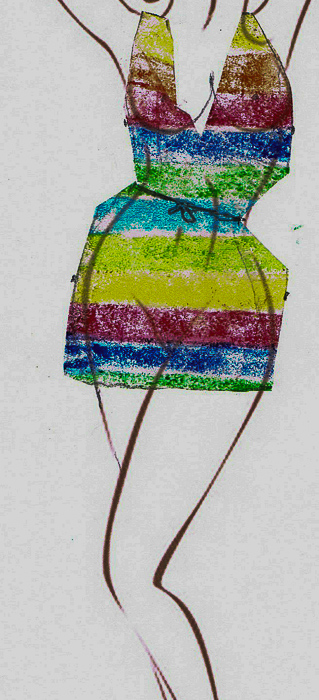
“She chose dark blue, falling to mid-thigh, with a waistrope of plaited kid and four carved bone fastenings through kid loops on each side. She wore this as they left the stall. Over her arm, she carried a deep green tabard with similar fastenings and one in paler blue, embroidered with a red and green kylon and with silver fastenings and a waistrope of auburn maidenhair. All had the medium diamond cut neck, giving a v at front and back. Tears spilled briefly as she recalled that, on her return home with Okkyntalah, they would have cut each other’s hair to shoulder length and sold the long tresses, keeping enough back to weave into a waistrope for her.”
This passage is from ‘Joinings’, book 1 of the epic fantasy trilogy, A Seared Sky. It’s part of a longer scene, describing a trip to a local market as a treat for young women forced to abandon their loved ones and undertake a perilous journey. In this particular scene, we’re given an insight into the choices made by the lead female protagonist and a clue about her feelings of loss. ‘Fashion’ isn’t a general topic for fantasy, but the clothes provide clues about the nature of the characters, so a description makes sense. What could have been a simple factual account is given an emotional element to allow the reader to empathise with the character. The description of the clothes helps the reader build a picture of the girl’s appearance.
If nothing else, I hope this series will enhance our writing with words that more precisely reflect what we’re trying to convey to readers.
I prefer to use Roget’s Thesaurus when editing; the 1987 edition. It’s within easy reach on my reference shelf. Other books of word choices, which I sometimes consult when the apposite word evades me, reside alongside it. But, first, I try to glean that ‘right’ word from the teaming void within my skull: it’s good mental exercise and trains the brain to seek and find the right word in the future.
A good thesaurus provides alternatives for the idea of the word you’re seeking, but not all the suggestions are true synonyms. Always consider context by placing it in the sentence and making sure it actually makes sense.

 Stuart Aken