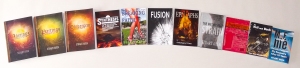


This series aims to help authors express the full meaning and emotional content of their fiction. As writers, we seek to inspire readers with joy, stoke their terrors, romance them with love, overwhelm them with horror, inflame their passions. This set of posts examines how we might influence mood, illustrating how word choice and sentence structure can alter the reading experience. All thoughts and comments are welcome.
Sorry if this example is a bit ‘hot’ for you, but I want to try to illustrate all types of fiction writing in this series.
Example:
“I feel him coming and go with him. We reach orgasm together and his hands are all over me so I’m filled with pleasure.”
This passage is intended as erotica, but there’s not enough emotion or sensation here to engage the imagination of the reader here.
Let’s look at an alternative.
“I feel his passion and his climax rising and he’s lost in me. He’s mine every bit as much as I’m his. We come together, becoming one so that it’s impossible to know where I end and he begins. The waves of pleasure sweep across me, touching and reaching every part of me so that, with him, I’m a living place of pleasure, and nothing, no one, nowhere else exists for a time I can’t measure.”
This passage is from ‘The Light Touch of a Dancer’, a story in the erotic anthology, ‘Sensuous Touches’. It’s part of a much longer description of an act of love between a young woman and the man she’s selected as a partner. The language reflects the mood of the intimate act without stepping into the crudity that can so easily destroy such a scene. I repeated ‘pleasure’ for effect. I could have used ‘sensation’, but pleasure is a more comprehensive term, and I used ‘sensation elsewhere in the section. Writing in the present tense makes the experience more immediate for readers.
If nothing else, I hope this series will enhance our writing with words that more precisely reflect what we’re trying to convey to readers.
I prefer to use Roget’s Thesaurus when editing; the 1987 edition. It’s within easy reach on my reference shelf. Other books of word choices, which I sometimes consult when the apposite word evades me, reside alongside it. But, first, I try to glean that ‘right’ word from the teaming void within my skull: it’s good mental exercise and trains the brain to seek and find the right word in the future.
A good thesaurus provides alternatives for the idea of the word you’re seeking, but not all the suggestions are true synonyms. Always consider context by placing it in the sentence and making sure it actually makes sense.

 Stuart Aken
Holy Mackerel! (In a good way!)
LikeLiked by 1 person
Thanks Meg.
LikeLiked by 1 person