

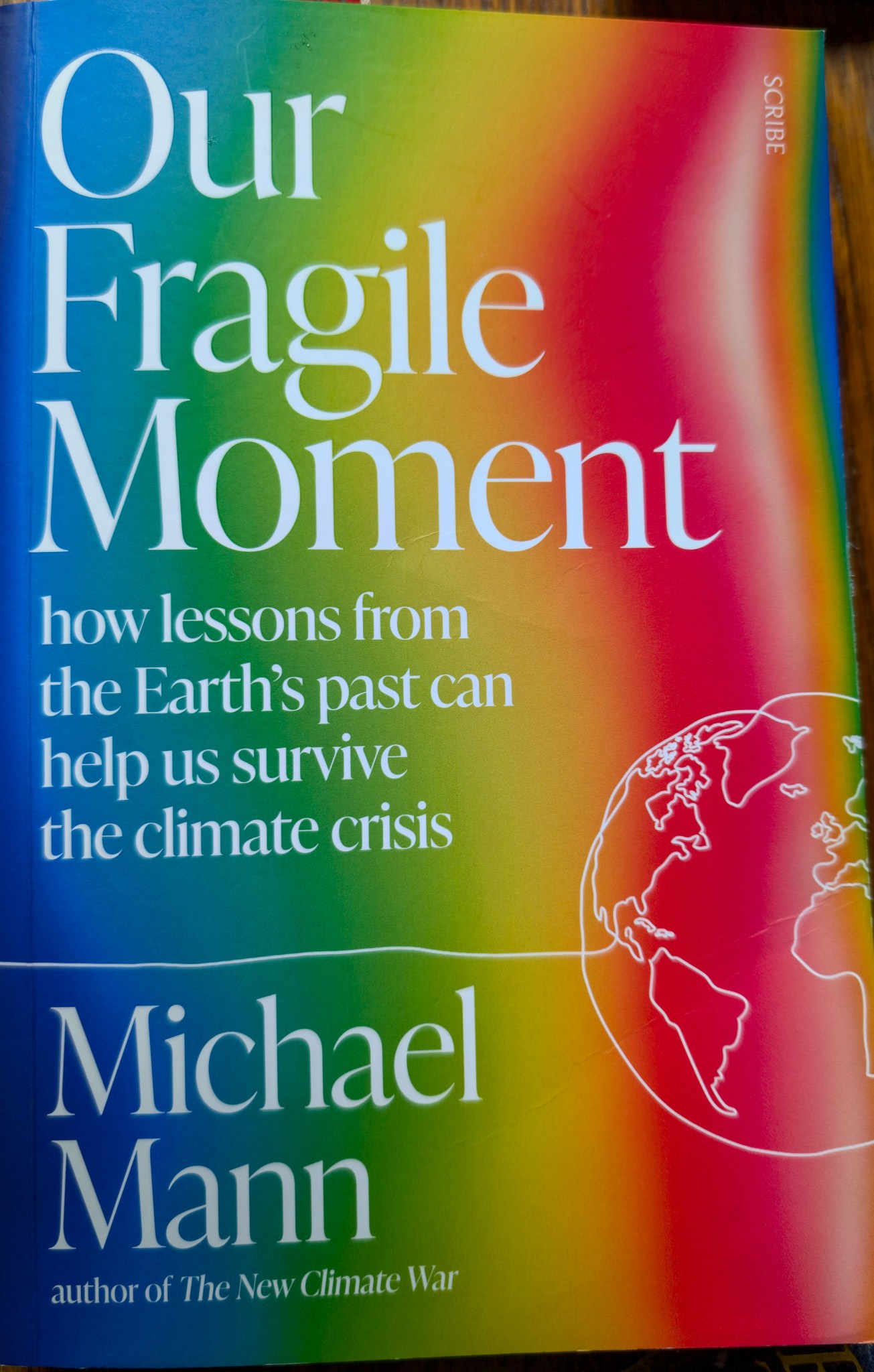
Our planet, the only one we have, has been around for 4.54 billion years (4,540,000,000,000 years). The very first proto-humans emerged around 2,000,000 years ago, and human civilisation (such as it is) has been around for under 6,000 years. Only for 0.00001% of the history of the Earth have modern humans been around. And look what we’ve achieved in that tiny, infinitesimal moment of our existence.
Nature, modified by extra-planetary events including the varying power of the Sun, collisions with asteroids both large and small, has managed to create a sustainable world on which we have thrived. Until now.
Humans are the only known life form that has managed to negatively alter the environment in which we, and all other life, currently exist.
This book examines, in forensic detail, the history of our world. The author explains what changes have occurred during the formation and gradual settlement of our home to bring it to its current state of relative equilibrium. We, however, during the very short period since we began to industrialize our planet, have introduced such a state of instability that we now occupy a space that may very soon become impossible to live in for some plants and animals, and where large portions of our world may soon be uninhabitable for the human race.
Michael Mann explains how we have come to this, how our influence has created what is elsewhere described as our climate emergency. But, as a scientist, he avoids the emotional aspects of predictions designed to cause panic and even a sense of defeatism by some people.
He describes how it is neither too late to make the necessary changes nor inevitable that we destroy ourselves along with many thousands of other life forms.
It is not an easy read, but it is fascinating and illuminating. I suggest you arm yourself with a small pad and a pen to list the many acronyms in full form. Michael Mann explains the full terms when initially introduced, but I confess I lost track of some of the full terms whilst reading.
This is a book based entirely in science. It avoids opinion, both pessimistic and optimistic, instead delivering a neutral picture devoid of nightmare or complacency.
There is no doubt some readers will find aspects of this extraordinary book difficult. Some will be tempted to skip certain passages. But if all readers fully read the final chapter, which provides an excellent summary, both comprehensive and relatively brief, well presented and giving an overall assessment of what is needed to prevent the worst of the excesses we face if we do nothing, there is a chance we may manage to more than merely survive this threatened emergency and actually continue to thrive here on the only planet we have.
‘The impacts of climate change, no doubt, constitute an existential threat if we fail to act. But we can act. Our fragile moment can still be preserved.’ Michael Mann
[Any review is a personal opinion. No reviewer can represent the view of anyone else. The best we can manage is an honest reaction to any given book.]

 Stuart Aken
Pingback: Our Fragile Moment, by Michael Mann #BookReview. | Rashid's Blog: Portal for Inquisitive Learners
I would think, given the author, that the book does have an opinion.
LikeLiked by 1 person
I’ve not read any of his other books, Noelle. I know there’s also a film director with the same name. But this author is a world-renowned scientist, and the book is definitely written from a scientific standpoint rather than a personal one. It relies heavily on facts and there’s almost nothing I would identify as ‘opinion’.
LikeLiked by 1 person
Thanks for this suggestion, Stuart. I now have time to read stuff other than work materials!
LikeLiked by 1 person
I’d advise every intelligent and sane person to read it. It places the whole climate situation into an historic context that removes much of the rumouring about it ‘being too late’, and that we can’t fix it. But it also stresses the fact that if we fail to start acting NOW, we’ll definitely end up with a worse climate situation than we are currently experiencing.
LikeLiked by 1 person
I still haven’t read this, but it has some great reviews.
p.s. 4.54 billion = 4,540,000,000. but 6,000 years is 0.00001% of that!
LikeLiked by 1 person
Thanks, Mick. I missed out a zero, but I’ll edit it in now!
LikeLiked by 1 person
Yes, it’s 4.54 English billions, not US ones.
LikeLike