

This story was first published in the now discontinued Writers’ Forum magazine in May 2007, when it won the 1st prize in their monthly short story contest (£300.00, quite a generous sum). The story was, at that time, part of a romantic thriller I was writing, and altered to stand alone as short fiction. This was before I took on my pen name and was therefore published under my given name. The novel, Breaking Faith, was subsequently published, using my pen name, under an Arts Council funded scheme in 2008, by YouWriteOn.com.
The Best Possible Time
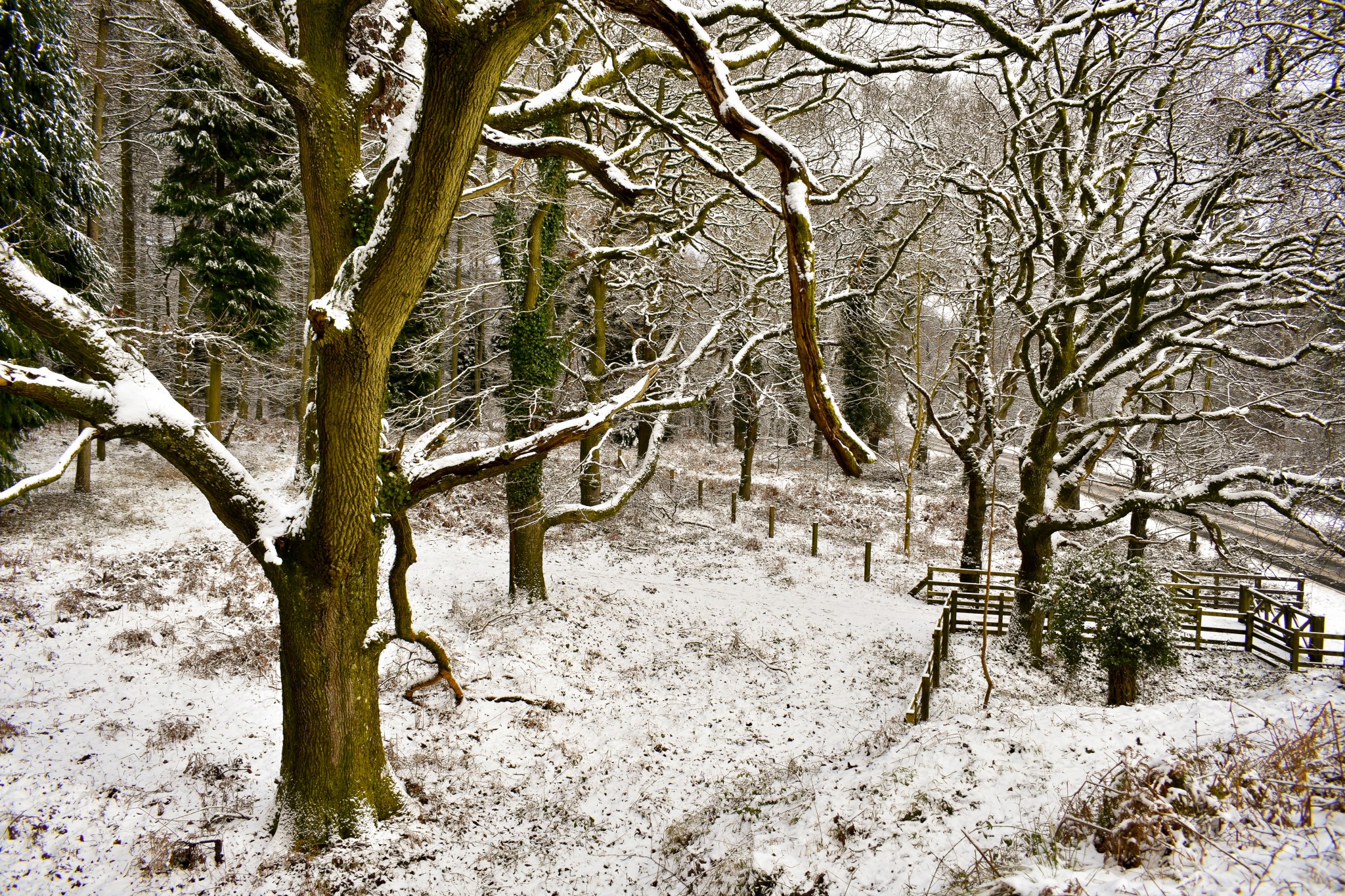
For twenty-three minutes, the ancient longhouse capping the head of the narrow lane had intimidated Charity, staring down through its fringe of skeletal trees. Reputation oozed from stonework a shade paler than the winter sky. Gossip whispered among naked branches, pointing fingers of guilt, complicity and envy, condemning and praising her planned audacity.
‘I shouldn’t be doing this: it’s foolish, dangerous.’ Her breath veiled her vision with soft white clouds as she voiced fears she felt compelled to overcome.
So, she awaited the appointed time.
Stamping her small feet failed to alleviate creeping numbness. Third-hand walking shoes, bought for next to nothing from Oxfam, gave scant protection against windblown snow seeping in to freeze her toes.
She drew a white fist from the copious pocket of her outsize coat, bought from the same shop. Dragging back the frayed cuff, she checked her watch; the only present Mother had ever given her, and that only so she’d never be late.
It was time.
Pushing a wayward strand of hair, dark as shadows, back beneath the woolly hat, she inhaled cold courage and moved. Small, dark footprints marked her route across the rutted road to the opening opposite.
As if approaching execution, she trudged the sinuous strip of virginal snow leading to the gates of Longhouse. Within, lurked Will Thakeston.
‘Why am I doing this?’
The question was redundant. She knew why: few opportunities in the area for a woman lacking transport, her desperate need for employment and, not least, her yearning to push hard against the door of Mother’s cage.
Should she become his helper, Mother’s constant nagging and whining would make living at home intolerable. The wage would make escape possible, removing her excuse of poverty to keep her home. Was she ready for such upheaval? Ready to abandon the only way of life she’d ever known?
She must face the man described by most as a promiscuous philanderer, by a few as the area’s most eligible bachelor. Neither description held appeal for her; inexperienced as she was. Her determination threatened to melt into panic.
Everyone knew he was a photographer who took pictures of women with nothing on. Suppose he asked her to take off her clothes? Suppose he didn’t?
She knew how people described her; scruffy, an idiot. But, under the cast-offs and hand-me-downs, she was a woman, like any other, and unique. Her clothes made her stupid: old women’s clothes Mother bought from charity shops for modesty and cheapness.
Almost at the five-bar gate, she halted as the central door opened on its secrets. But the mystery of the house was forgotten as a tall man emerged, yawned and stretched on the doorstep. In spite of the cold, he was in shirtsleeves; bare arms strong and tanned.
He stepped into wellingtons and walked toward the gate, surveying the landscape behind her. They reached the gate almost together.
‘Hello. I expect you’re Charity.’ He extended his hand over white wood in welcome. ‘Will Thakeston at your service.’
Charity’s cold fingers were lost within his warm, firm hand.
‘Your tiny hand is frozen.’
The reference meant nothing to her.
‘Come in and get warm.’ He opened the gate. The latch snapped shut behind her. No turning back, now. She heard his feet scrunch soft deep snow as he followed, and she felt renewed anxiety at the prospect of entering his den.
On the threshold, she hesitated. She could run back home. This priceless opportunity would be gone forever, and Mother would laugh with habitual scorn. ‘Told you so.’ And Charity would continue her existence of abuse and shame beneath Mother’s domination without hope of escape.
Will made the choice for her a split second before she decided. ‘In you go. Ma’s got the kettle singing for a cuppa. Come on, she’ll have my b….give me what for if I let the heat out.’
She stepped into warmth that was overpowering after her long wait in the bitter north-easterly. Will slipped his feet out of rubber boots and into soft moccasins as he shut the door.
And she was in the beast’s lair.
‘Whoa! No further in your outdoor shoes, Ma’ll skin me alive!’
The idea of a woman having power over this big, craggy man made Charity smile. But the notion of removing her shoes and exposing darned socks left her paralysed. The heat made her dizzy and she looked in panic for a place to sit.
‘Ma! Fetch that coffee, will you?’
Charity felt the room swimming, watched it darken. A buzzing in her head increased, muting other sound. The man said something she couldn’t hear. Colour dimmed as contrast drained into uniform blackness.
She came round on her back with her feet in the air. Whiteness overhead, bright as snow, made her think she’d collapsed outside. When her eyes found focus, she saw the ceiling. In the same instant, she was aware of warm hands rubbing and massaging her cold bare feet. Skin sensual on skin.
‘I…I’m so sorry…’ She was mortified at her condition and suddenly anxious that more than her shoes and socks might’ve been removed. But only her heavy coat was missing.
‘Lie still. Give yourself chance to come round properly. I told you this room was too hot, Ma.’
Ma floated into view and Charity recognised her. Everyone knew Ma Hodge, Will’s housekeeper, and how solid and down to earth she was. It was comforting to have her present.
‘Come out wi’out breakfast?’
‘I didn’t want to be late.’
‘Had time to give your good-for-nowt mother breakfast in bed, though.’ It wasn’t a question and Charity felt disconcerted that her home life was such common knowledge.
Will rubbed her feet, bringing them back to life. The sensation mixed unfamiliar pleasure with customary pain. The return of feeling brought a hot ache with pins and needles, but Will’s gentle hands gifted a sense of security and care she’d never known. She felt more confused than ever.
Looking up, along the length of her legs, she saw her skirt had revealed her knees. And from where Will stood, he might see more than he should. That he was studying her face reassured her a little, but she must escape this vulnerable position.
‘I’m fine now, thank you’
‘Sure?’
‘Yes.’
Will eased her feet to the floor, stretched out a hand to help her up. ‘Careful. Let’s get you into a chair.’
His kindness and concern could be a ploy to put her at her ease so he might take advantage of her later, as Mother had warned. But it didn’t feel that way. He seemed genuine.
‘I’m dreadfully sorry, Mr. Thakeston, I don’t know what you must think of me. I don’t normally do this sort of thing.’
‘Faint at men’s feet? Happens to me all the time.’
She felt he expected her to respond but lacking experience of such banter, she simply frowned.
‘Worry not. And it’s “Will”, please. I hate the Mister bit; makes me feel a hundred.’
‘And he’s only ninety-seven, you know,’ Ma chirped in.
Charity placed him between twenty-eight and thirty-five. He made a wry grimace at Ma’s comment. It was a form of humour Charity had experienced, so she dared join in. ‘I’d have placed you much younger than that, Will.’
His face lit up.
‘No more than eighty-eight.’ She prayed she hadn’t made a mistake in this new game.
Ma glanced surprise at Will. ‘Cheeky little madam, isn’t she?’
‘And obviously fully recovered,’ Will shook his head in mock despair.
Charity sighed relief.
Ma poured hot drinks, offering alternatives. She’d made coffee, so Charity accepted that, in spite of her preference for tea. Cups and biscuits dealt with, Ma gave her a quick appraisal to make sure she was comfortable and returned to her kitchen.
Will sat back in his leather swivel chair, feet stretched out in front of him, and studied her over the top of cupped hands. ‘Not too hot in that jumper?’
Underneath the homespun Arran sweater, she wore a white blouse, laundered for the occasion. Would he ask her to take off anything else? But it seemed a shame to waste her preparation, and he might’ve asked simply out of concern for her comfort.
‘I may be more comfortable without it. Do you mind?’
He shrugged and gestured his approval.
Apart from her coat, she’d never removed clothing in front of a man. She wasn’t sure she should. Mother would disapprove, but that was the best reason for going ahead. She stood and pulled the heavy cream sweater over her head, praying the blouse would remain tucked into her ankle length skirt and her long hair would fall back tidily.
Will looked her up and down. ‘Much better. A significant improvement.’
Natural modesty and Mother’s strict, puritanical upbringing vied with the sense of value and worth she experienced in this man’s eyes, leaving her confused how she should and did feel about his admiration. Mother had told her no real man would give her a second glance, but Will looked at her with undisguised pleasure.
To her relief, the blouse stayed put. She sat demurely after folding the sweater. When she turned to place it over the arm of the chair, she saw her tatty socks steaming in front of the fire and blushed.
Here, in this house that could swallow Mother’s cottage four or five times, she recalled her true situation in life. The furniture in this room alone must be worth more than everything her mother owned. The evidence of her poverty emphasised the gulf between her ambition and experience. She sighed resignedly at the hopelessness of her quest.
Picking up her coffee, she drank slowly and decided she might as well be herself and bring the interview swiftly to its inevitable conclusion. A man like Will Thakeston was unlikely to employ a simple, ignorant country girl like her. Her acceptance of likely failure decreased her anxiety and allowed her to relax a little. She was used to rejection; Mother had ensured that.
‘So, Charity. I may call you Charity, I suppose?’ His tone made refusal seem churlish.
She nodded.
He smiled encouragement and then became quite serious. ‘Tell me, what makes you think you can be my Girl Friday?’
That was the term that had caught her eye on the postcard in the village Post Office. She’d discovered a “Girl Friday” was a female employee with a wide range of duties, usually including secretarial and reception.
Charity looked into his face to find a clue to the real man and found she was unable to choose between the evidence of her eyes coupled with recent experience, and local rumour. The fact that he wasn’t treating her like the village idiot she was so frequently labelled gave her some hope.
She decided on frankness and honesty. ‘I’m the best you’ll get round here for the money you’re offering.’ She was incapable of making anything up anyway.
He laughed out loud. ‘Well, I like straight dealing, so that’s a good start. Can you type?’
Charity had expected this.
The ancient manual typewriter, parked on a table in the corner and half hidden under a collapsing pile of glossy magazines, she’d initially assumed to be some sort of museum piece. But there was no PC or electronic typewriter.
‘On that?’
‘It’s all there is.’
Recalling the computer, with its sophisticated software, that she’d used at the cheese factory until Mr Barnard’s wandering hands had made her leave the office, she shrugged, ‘May I?’
He gestured toward the table. An antique, ash, dining chair stood there. She pulled it out and dragged the typewriter forward. Taking a photographic magazine from the pile, she flicked through, trying but failing to ignore the naked women, and found a passage of prose. Quickly she typed a copy on one sheet. One reason to thank Mother: she’d forced Charity to learn to type on an even more antediluvian machine at home.
Will took the sheet she handed him with the magazine. As she returned to her seat, he scanned both.
‘Impressive. Shorthand?’
‘Try me.’
He handed her a notepad and pencil from a drawer in the leather topped desk. The letter he dictated flowed easily off his tongue and she concentrated hard to keep up.
‘Read it back.’
She was word perfect, in spite of the technical language, but had the temerity to suggest a couple of changes to his phrasing. He considered these and nodded.
‘Dealt with suppliers?’
‘Yes.’ Rather than make him dig for her experience and qualifications, she gave a brief overview.
‘Excellent. I have to admit, Charity, I’d heard rumours and gossip and expected you to be a hopeless dimwit. Your manner on the phone impressed me enough to give you this interview. Your performance so far has backed up that impression. But I was hoping for more glamour. You’re a hell of a lot better looking under that dreadful coat than could be guessed, but you’re not miniskirt and exposed cleavage, are you?’
She reddened as she sat with her hands primly in her lap as Mother had taught her. ‘Is it a condition of employment that I display my limbs and my…er, my upper body?’ She knew she was being ridiculously coy by modern standards, but Mother had made her very private about her body.
Will considered her question. If he said it was, would she bow to his wishes in order to get the job? She had no answer.
‘Hadn’t really thought about it, to be honest. I just like attractive women around me.’ He was silent for a moment. ‘No, it’s not a condition of employment.’ He laughed; a warm, friendly sound that made her comfortable even though she couldn’t share the joke.
There was something else she must know, in light of the rumours. There was nothing for it but to ask. ‘Would you expect me to take off my clothes so you could photograph me?’
He considered her question for such a long time that she began to feel distinctly uncomfortable.
‘You’re potentially a very attractive woman, Charity. Do something with that gorgeous hair, replace those hand-me-downs with proper wrappings, apply a spot of make-up and you’d outshine many professional models. Touch too thin for me but you’d probably make a lovely subject.’
She felt admired rather than stripped but how could he tell when she was fully clothed? She felt crimson flood her skin and daren’t look at him.
He carried on, apparently oblivious. ‘I’ve never expected, let alone asked, any woman to do anything against her will or her nature. Physically, you’d be fine as a photographic model, but spiritually, emotionally, you’d be useless.’
She wasn’t sure whether she was flattered or insulted by his frankness.
‘In any case, I don’t do many nudes now. I take portraits of women, faces only or clothed bodies, except for commissions and girlfriends, for my personal collection.’
‘Apart from secretarial, and reception, what other duties are there?’ She cringed as she realised, she was asking as if he’d offered her the job.
‘Occasionally I need help in the studio; it’s part of the house, by the way. And, from time to time, I’ll need help in the darkroom and finishing room, trimming prints, mounting, that sort of thing.’
‘I’ve no experience of such work.’
‘I’ll teach you. Would you like the job?’
Charity stood and gazed around the room. He really was offering her employment. She was in turmoil. Mother would be astounded and dismayed, but mostly just anxious at what her rapidly diminishing bunch of cronies in Chapel might say. She’d have to choose between the job and Mother.
She went to the window, for breathing space, and because she wished not to look at him as she accused him of some of the gossip she’d heard. ‘May I ask you two very serious questions first, Will?’
‘Scary!’
‘Most people think it odd that you run a photographic business from up here in Longhouse. It seems remote, inconvenient and hardly sensible for your sort of business.’
For a moment he was silent, weighing up his response. ‘I inherited Longhouse from my Uncle Peter, who raised me after my parents died. He asked me to keep the house in the family, where it’s been since it was built. He wanted me to live here for the rest of my life. I’ve done that, in spite of disadvantages to my business. And I intend to keep doing it. Next question.’
He spoke with sincerity and a little hostility, as if she’d invaded his privacy. She believed him. In a way, her intrusion on his privacy made the next question easier.
‘Why are you willing to employ the village idiot?’
He laughed at that with genuine delight. ‘I might ask why a virginal, chaste and puritanical young lady, with undeniable charms, would risk her precious reputation and the wrath of her bigoted mother by entering the lair of a notorious womaniser and philanderer?’
She gave him a wry smile. ‘Reputations: strange, inaccurate and sometimes cruel. But folk will insist on believing them.’
‘Except those in the know.’
Looking out at snow covered fells and over the valley with its dry-stone walls and dark, tree-lined ribbon of river, Charity sought guidance. She’d made the appointment, undergone this interview with its attendant anxieties and risks, for many reasons. Now it was time to decide.
‘When can you start, Charity?’
She gazed at the beautiful view, aware of Will, waiting. The sun peeked through a gap in the clouds, briefly lighting up fells and river, making snow and water sparkle.
Charity smiled at the sudden transformation and found a symbol of her possible future. She turned to look at the man who might have the key to open the door of her cage and set her free.
‘Now seems the best possible time, Will.’

 Stuart Aken
Thanks for the share, Stuart, and congratulations on the win!
LikeLiked by 1 person
Thank you, Lynette. Looks like you’re thoroughly enjoying your retirement!
LikeLiked by 1 person
I sure am!
LikeLiked by 1 person
Lovely, Stuart. I felt for Charity!
LikeLiked by 2 people
Thanks, Noelle. Me, too! In the novel she gets to experience a good deal more, of course. She’s one of my favourite creations.
LikeLiked by 1 person
I like this short story! Thanks for sharing it.
LikeLiked by 2 people
Thank you, Darlene. It takes a slightly different turn in the novel, but the ‘mood’ remains.
LikeLiked by 2 people