


This short series of posts, relating to places of interest in the English County of Wiltshire, is intended to help visitors know what to expect. I’m not presenting any real details of history, etc., simply describing as well as I can, with the aid of photographs, how to get there and what you might see. There are links to more informative sites for each place listed.
Salisbury, of course, is the city that’s home to the famous cathedral. It’s rumoured to be the place William Golding used as the model for his novel, The Spire’, a book I studied for my ‘A’ level English Literature exam.
What is it? Salisbury is a cathedral city in southern Wiltshire. It’s about 9 miles south of the famous Stonehenge (of which, more later in this series). And its cathedral houses one of the original copies of the Magna Carta.
Where is it? The city lies at the conjunction of the A36, A338, and A354 about 25 miles northwest of Southampton (Map here) We stayed at a hotel in the centre of the city, not far from the cathedral. Fortunately, they had a very good pictorial map of the place, which we used to take our walks around the place.

Will it scandalise you to know we decided against entering the famous cathedral? As atheists, we had no wish to add £22.00 ($26.70) to the coffers of a church organisation that has around £10.3 billion at its disposal and has committed to £1.2 billion in funding for the churches for the period 2023-25. Our reasons for this are multitude but include our objection to brainwashing children in any religion that uses fear as a means of coercion. Reading their Bible from cover to cover was what caused me to cease worship and become an atheist.
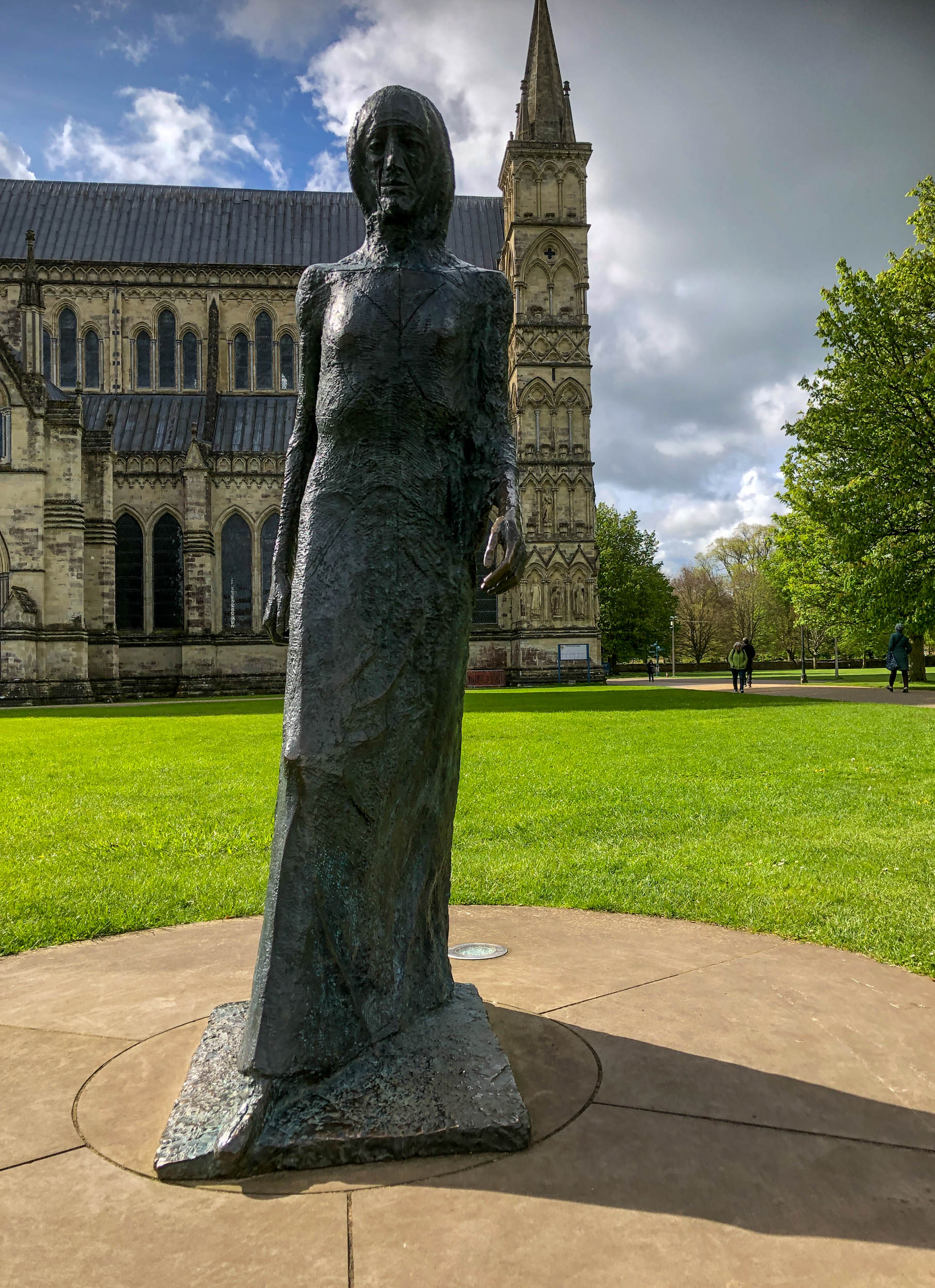
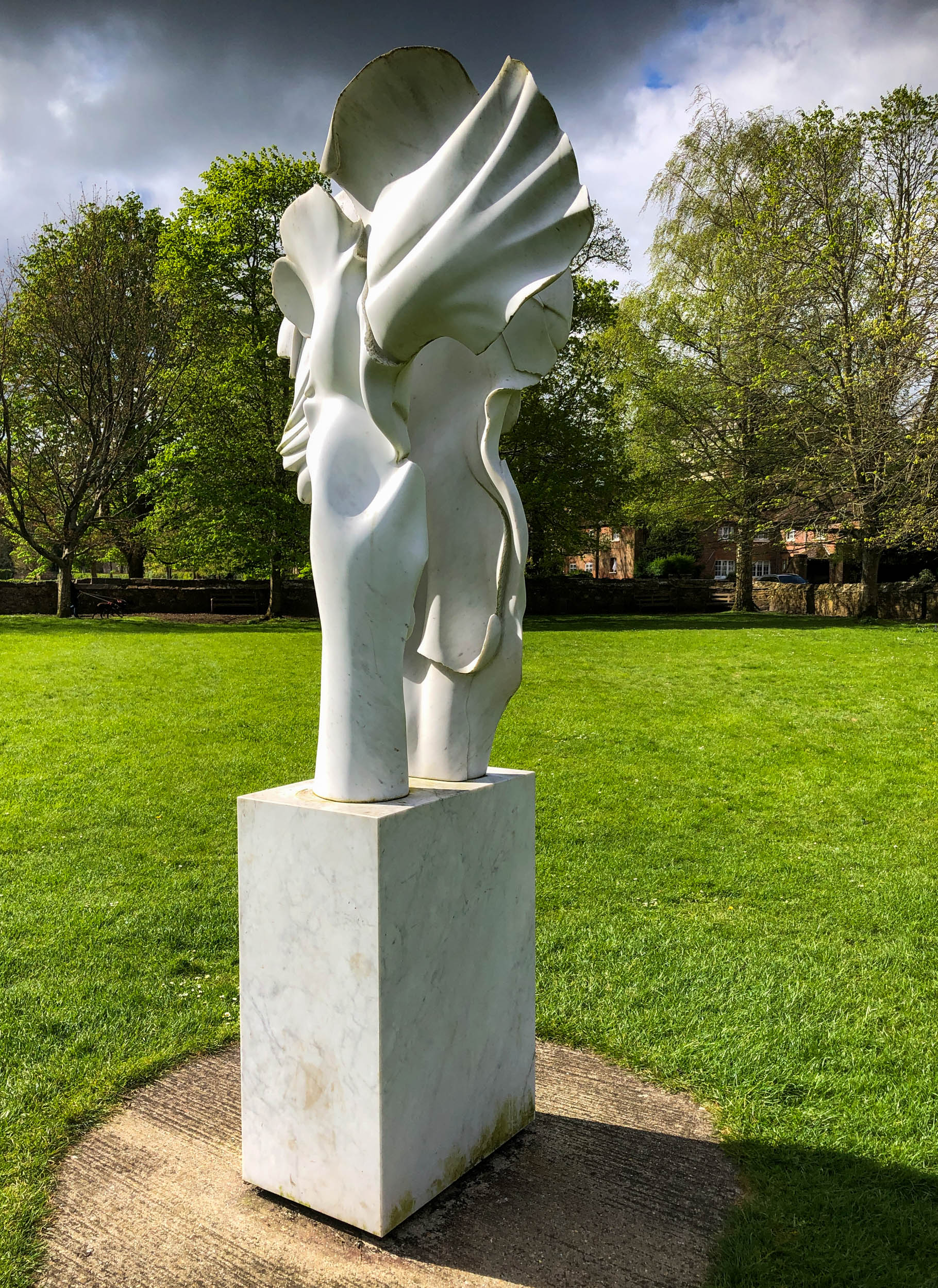
Walking Madonna, by Dame Elizabeth Frink. Angels Harmony, by Helaine Blumenfeld.
We circumnavigated the cathedral, encountering a couple of statues, and enjoying the distant views of a building that must have caused its builders significant difficulty. Their work has produced a magnificent edifice.
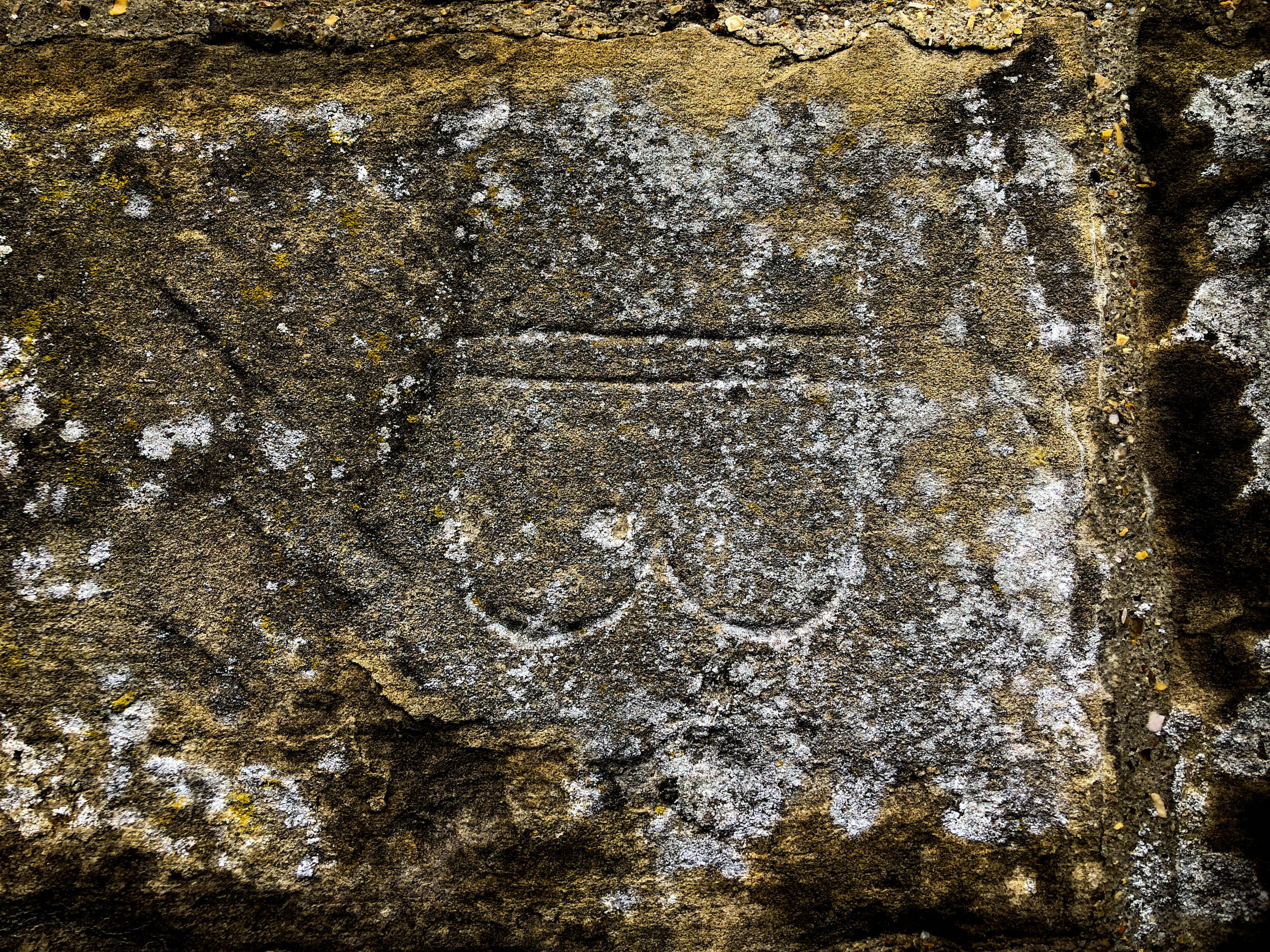

A wall bounds large parts of the grounds, and we discovered all sorts of odd stones mortared into its stonework, as if some major rebuilding had taken place over the centuries. We found that in 1331 King Edward III had granted the then newish cathedral the stone from the older Norman cathedral in Old Sarum (of which more in a later post), which probably explains the inclusion of these odd stones we encountered as we walked past the wall.
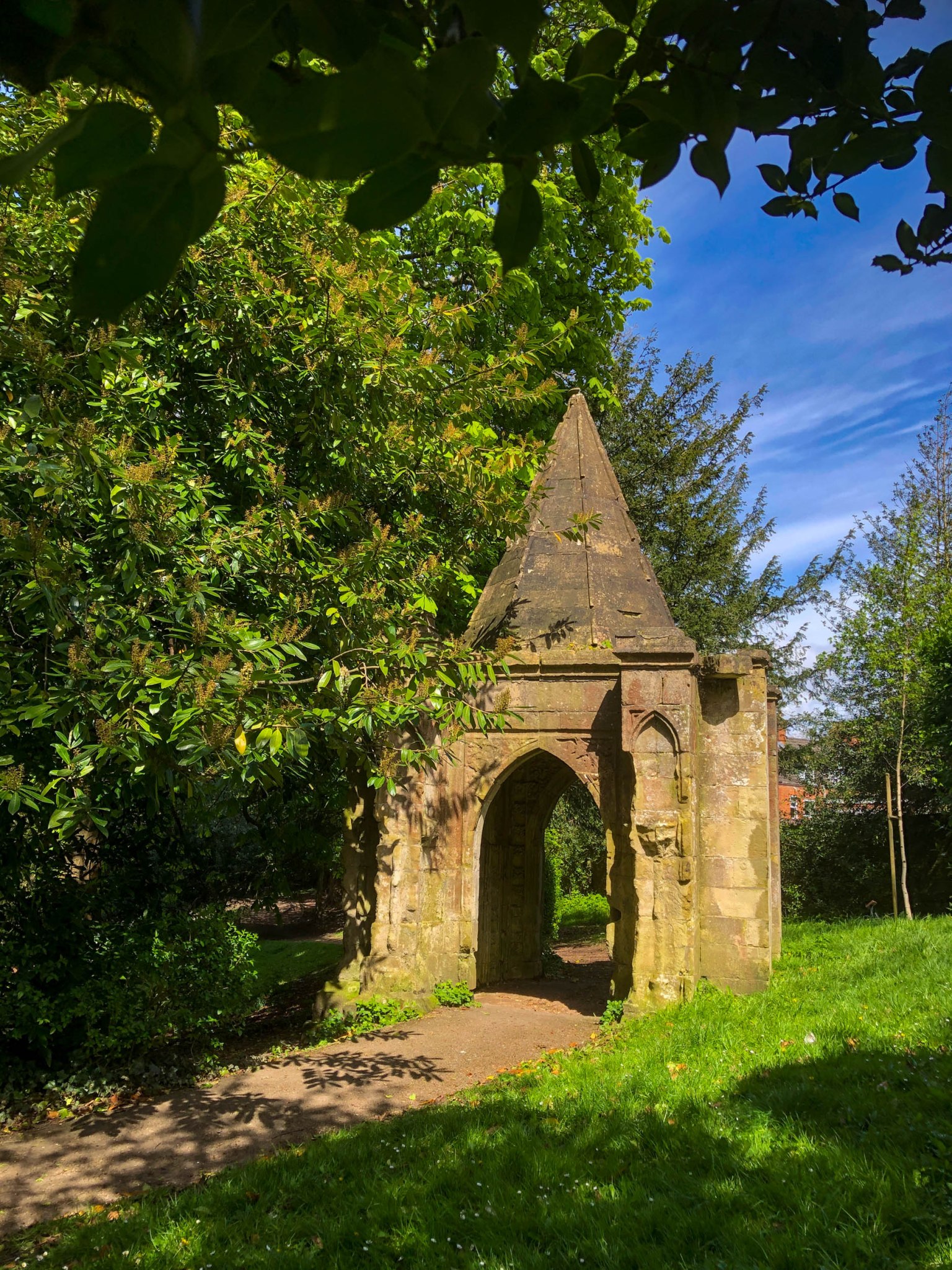
In North Garden, close to the eastern leg of the Churchill Way ring road, we came across an unnamed building of fairly ancient style. And we wandered through the gardens around the local Arts Centre and near the Police Station, all of which were small havens of peace.
Our map allowed us to see parts of the city most tourists miss. There are a few small parks, some of which provide an almost rural atmosphere, and a larger area of greenery on the southwestern edge of the city that’s mostly wetlands currently devoted to the raising of sheep.
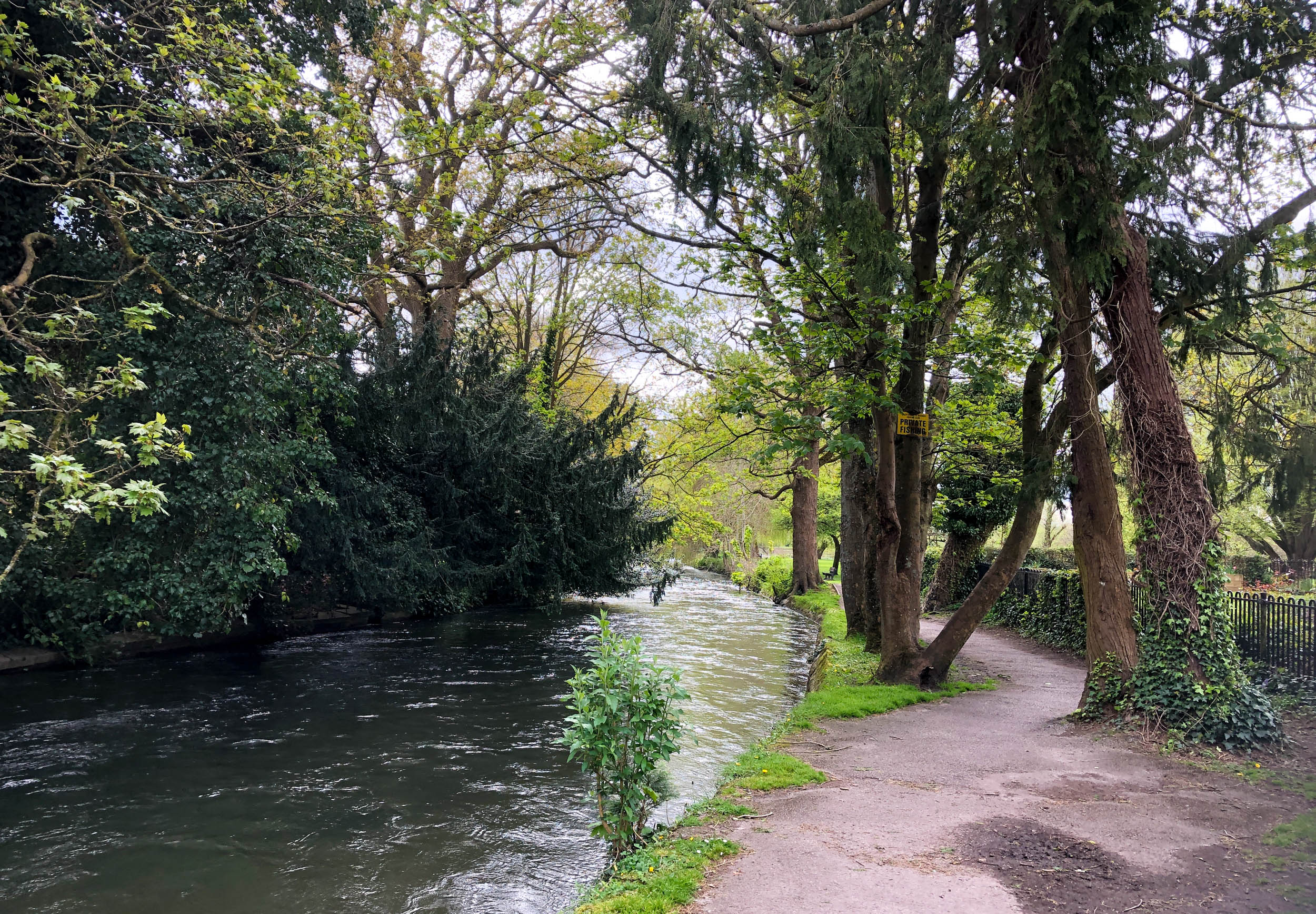


The River Avon flows through the city and is joined there by four other rivers, the Nabble, Ebble, Wylye, and Bourne. The past winter and early spring have been particularly wet in England this year, probably as a result of climate change, so the water levels were very high, making the river courses particularly attractive to the camera, but also causing significant flooding in the general area.
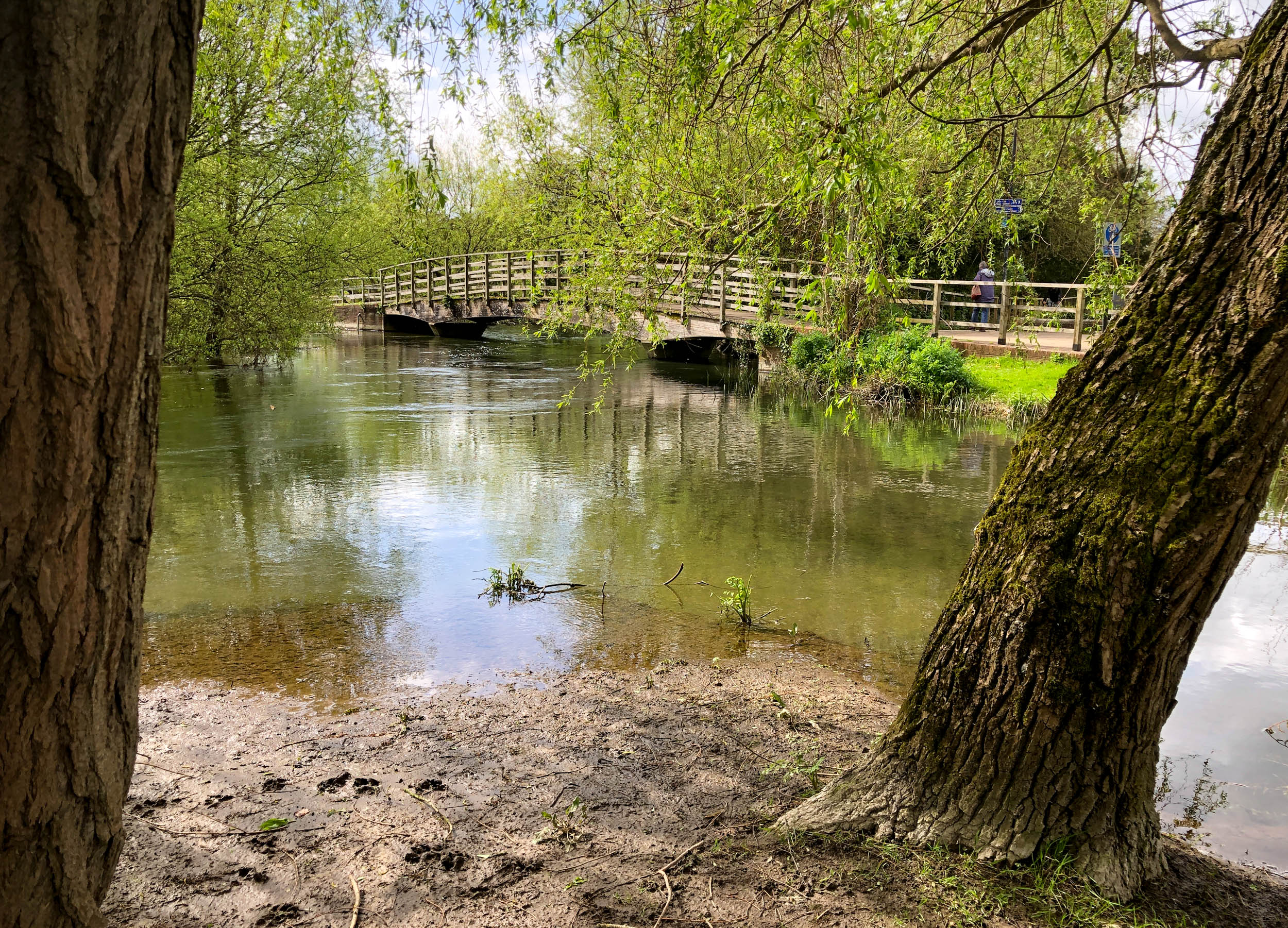
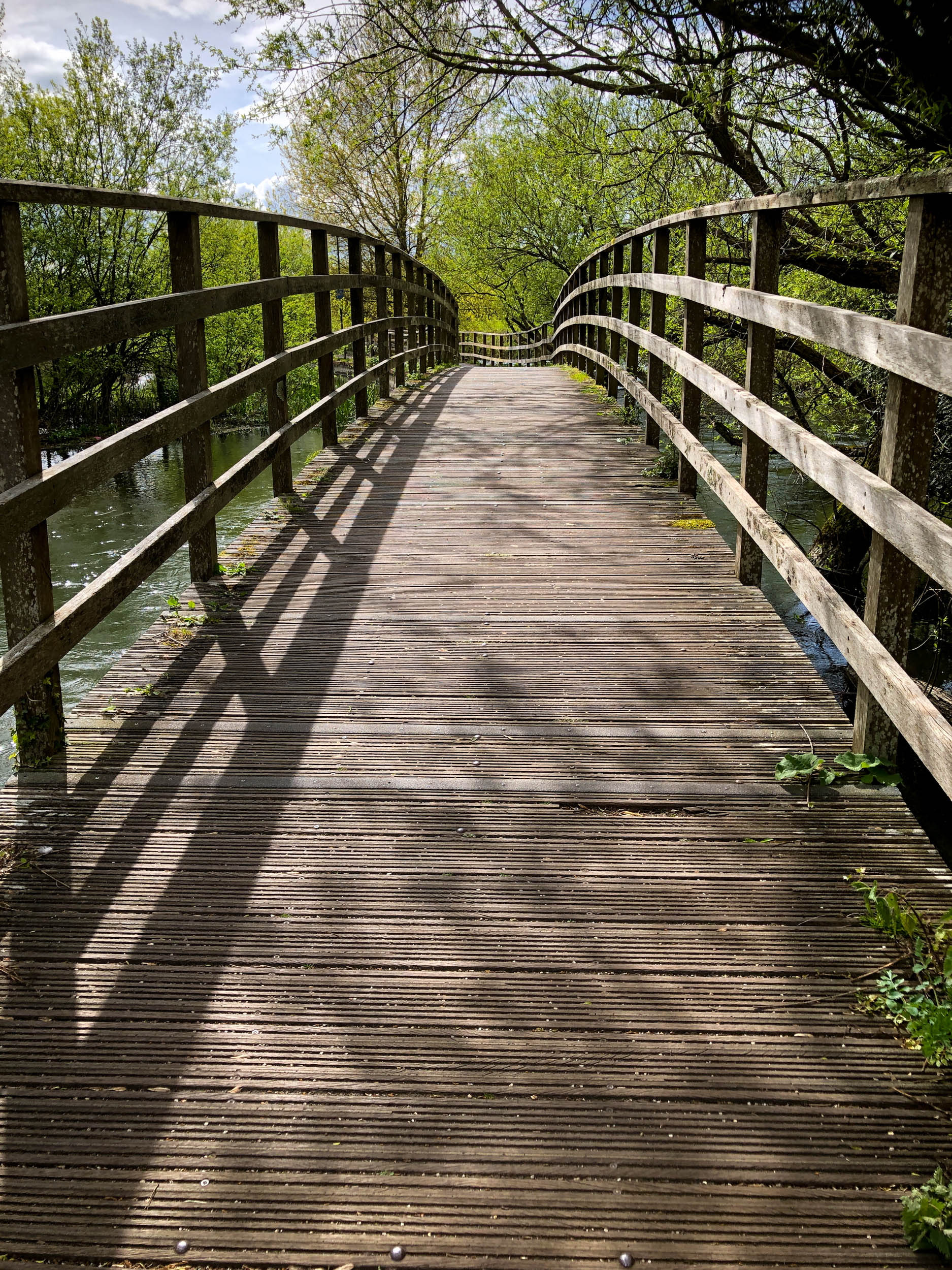
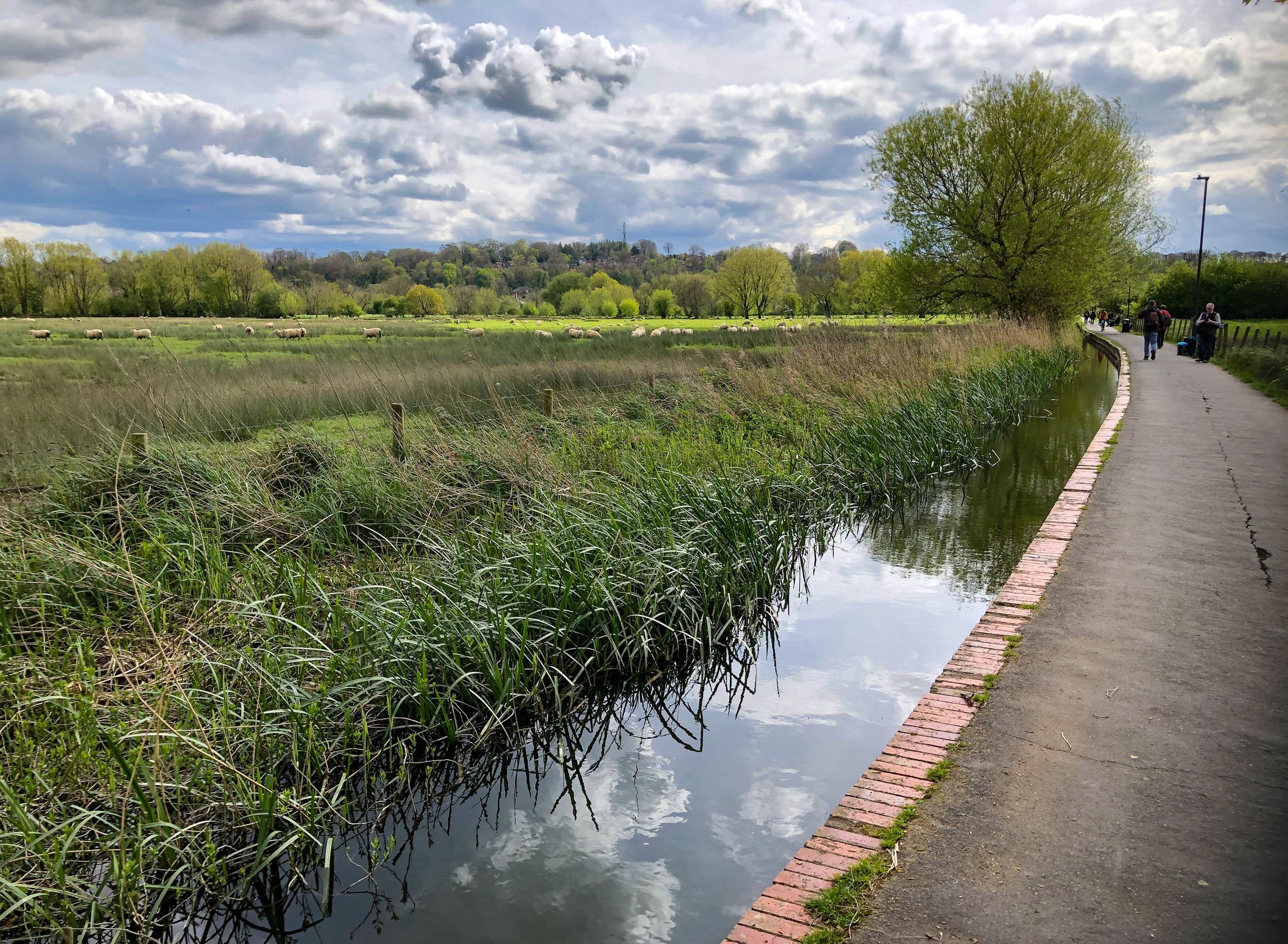

Our longest walk took us toward the Queen Elizabeth Gardens, beside the river, across the Crane Bridge, and along a public footpath that crosses the Harnham Water Meadows on the way to the small village of Harnham, via the Old Mill.

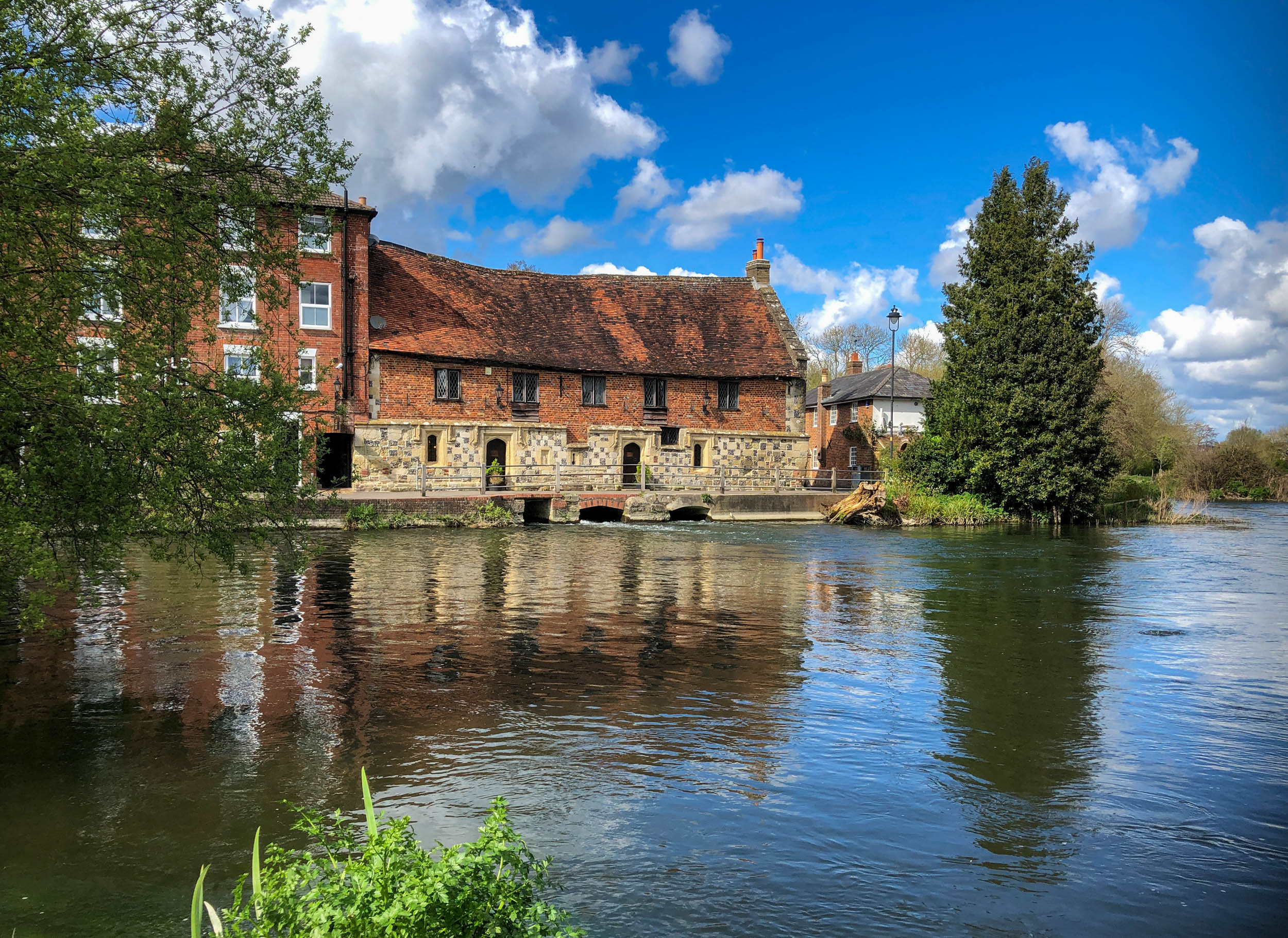

We’re not lovers of cities, but we enjoyed our seven mile walk on our second day of the stay. Anyone visiting the city would be advised to give that circular walk a try.


 Stuart Aken
I visited Salisbury and Stonehenge 30 years ago and found the countryside to be very beautiful (and of course, historic). I did visit the cathedral but I don’t remember paying a fee. It may have been some sort of voluntary contribution.
At that time no one was allowed to get very near Stonehenge which was very different from a childhood visit I made with my mother when I ran around them and even climbed on them too, I think (an obvious reason for now keeping people at a distance). There weren’t many other people there, either, as I recall.
LikeLiked by 1 person
The cathedrals all used to ask for donations, which they apparently needed to keep the places safe (that their owners, the Church of England, are among the wealthiest in the UK may suggest that the funds were actually for some other purpose). These days almost all of them make a specific charge, Lynette.
Stonehenge has had a varied history regarding visitors. It’s now housed within a relatively secure space and provides good facilities for visitors, who are not allowed too near the stones. But at the two significant equinoxes people are allowed into the circle to conduct their form of worship. I personally feel there was never a religious element to Stonehenge but that it was constructed so that farmers could know when the seasons would change in a time when calendars didn’t exist. Though it may well also have served a purpose as a focus for respect for buried ancestors, too.
LikeLiked by 1 person
We’ve actually visited Salisbury many years ago – after seeing Stonehenge, when you could walk amongst the stones – and did see the inside of the cathedral because it was free! A lovely spot.
LikeLiked by 1 person
Stonehenge was our main reason for our visit to Salisbury, Noelle, for Valerie’s birthday. That’s due to be the next post, in fact.
As for the interior of the cathedral, I have seen it, many years ago when I was in the RAF and stationed not far from the city. Went there with a friend and, as is so often the case, I was impressed with the artistry and workmanship of the building. It was free then, too. But almost all the cathedrals now make a charge. Last one I visited for free was in Norwich, 40 odd years ago, when I was fortunate enough to hear the organist practicing. He played Nimrod from Elgar’s Enigma Variations. Everybody in the place just stopped walking, most sat down, and all remained silent as the chords moved toward that amazing crescendo. Fabulous!
LikeLiked by 1 person
Most of the cathedrals we visited in Europe were free and we were treated to some organ concerts – and one a choir – when we stopped to see them!
LikeLiked by 1 person